
“`html
You fixed the design. Tweaked the CTA. Ran the ads.
But conversions? Still not where they should be.
Chances are, it’s not just what you’re doing, it’s what metrics you’re tracking and measuring. In 2025, the difference between a high-performing marketing strategy and a leaky funnel often comes down to the important metrics you’re tracking (or ignoring).
This isn’t another list of numbers. It’s a practical guide to the important conversion metrics that reveal what’s working, what’s holding you back, and where your next growth opportunity lies.

What are conversion metrics?
Conversion metrics are performance indicators that measure whether your digital efforts are prompting users to take meaningful actions. These could include actions like submitting a form, engaging with a feature, or completing a transaction, depending on what success looks like for your business.
By tracking how users respond to your website or campaign, these conversion metrics offer a way to evaluate how well your content drives real outcomes. They help marketers assess effectiveness, optimize strategies, and make informed decisions based on actual user behavior.
Importance of conversion metrics
Conversion metrics are more than just numbers; they offer actionable insights into how well your digital efforts translate into meaningful results. Here’s why they matter:
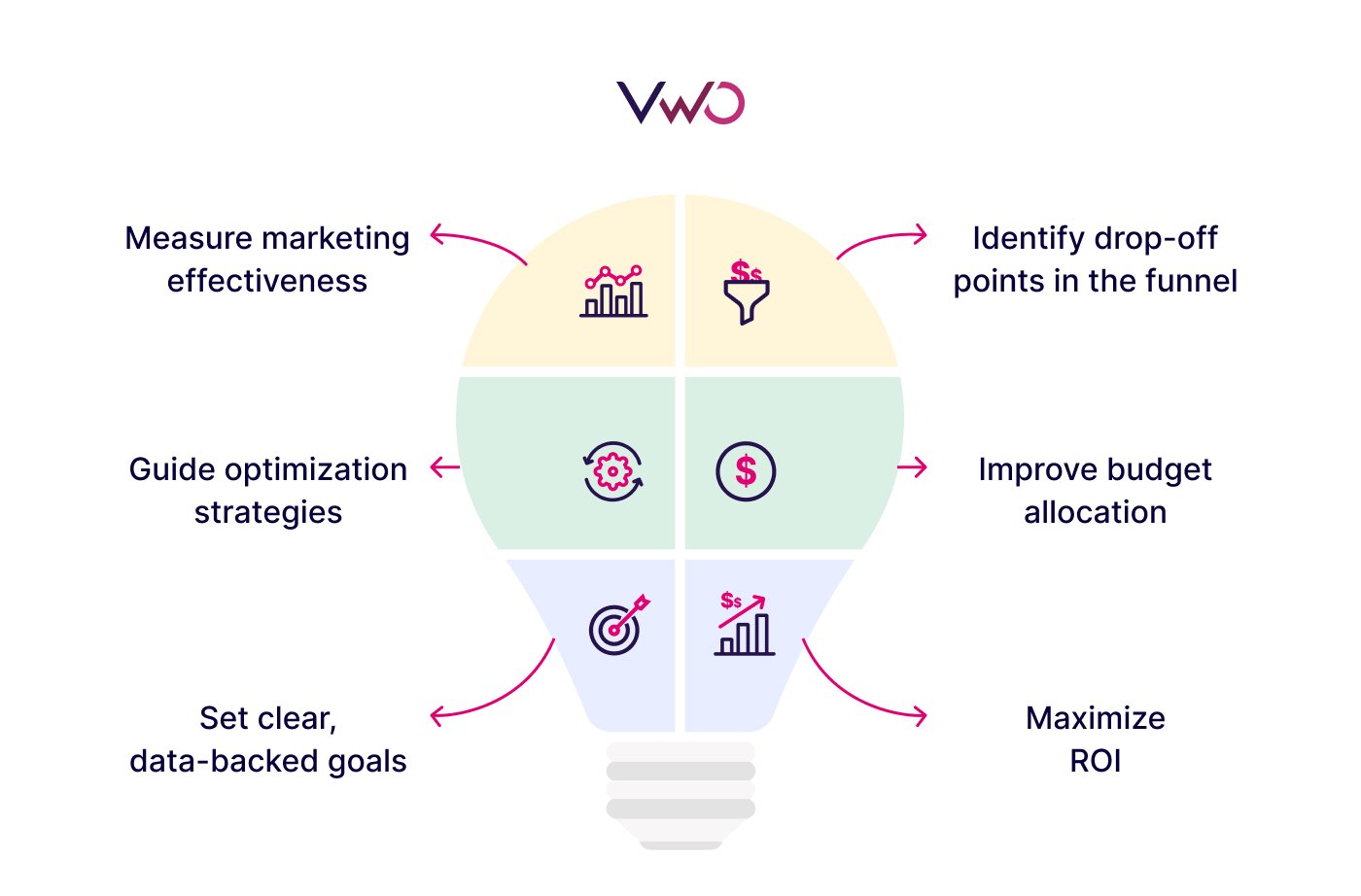
1. Measure marketing effectiveness
Conversion metrics show whether your marketing campaigns are prompting users to take desired actions, like clicks, sign-ups, or purchases, that contribute to your business goals. They go beyond just visibility (like impressions) and help assess if users are engaging with your content in ways that align with your business goals.
2. Identify drop-off points in the funnel
By tracking how users move through each stage of your sales funnel, conversion metrics help uncover where potential customers are dropping off. This makes it easier to pinpoint friction, optimize user journeys, and recover lost opportunities.
3. Guide optimization strategies
Conversion data forms the backbone of CRO (Conversion Rate Optimization). It helps teams test what’s working, whether it’s messaging, design, or targeting, and make iterative improvements based on evidence, not guesswork.
4. Improve budget allocation
With a clear understanding of what drives results, digital marketing budgets can be better allocated toward high-performing channels, creatives, or target audience segments. This ensures resources are invested where they deliver the highest return.
5. Set clear, data-backed goals
Conversion metrics provide a foundation for setting measurable performance benchmarks, like increasing form completion rates or improving trial-to-paid conversions. These goals align team efforts and create a shared view of key performance indicators, helping marketing, product, and sales work together more effectively toward growth, retention, and measurable progress.
6. Maximize ROI
Ultimately, optimizing for conversions leads to lower cost per acquisition and a better return on digital marketing investments, and a higher average conversion rate. It’s the difference between marketing campaigns that just attract clicks and those that deliver real, lasting value.
Key conversion metrics: Quick overview
Macro metrics:
- Conversion Rate
- Cost per acquisition (CPA)
- Customer acquisition cost (CAC)
- Customer lifetime value (CLV/LTV)
- Return on ad spend (ROAS)
- Revenue per visitor (RPV)
- Retention rate
- Customer churn rate
- Net promoter score (NPS)
Micro metrics:
- Website traffic & sources
- Click-through rate (CTR)
- Bounce rate
- Exit rate
- Average session duration