
“`html
The written copy used in HTML code to describe the appearance or purpose of an image or other visual element on a web page.
Also known as alternative text, alt tags, alt attributes, or alt descriptions, alt tags are read by screen readers to improve website accessibility or displayed when an image fails to load. Image alt text is used to help search engines understand the content on a web page.
Your website is crucial to the success of your business. You use it for everything from generating leads through to building brand awareness about your products and services. One thing every business website has is images, and optimizing your images can help you increase online visibility and traffic.
Any time your website uses images to support or supplement the rest of the copy on a page, you should be using alt text. In addition, many search engine results pages display images, so creating good alt text to help web crawlers understand your content is crucial.
Good alternative text can increase website visibility through SEO and make your website more accessible to screen reader users, enabling them to navigate your website and become valuable customers.
However, optimizing your alt text can help you create a better user experience for everyone—not just screen reader users. Because they’re displayed on images that fail to load, knowing the content of the images can help users better understand your website and its content. But what is alt text, and how can you write good alt text to help you rank better on search engines and improve your site’s accessibility?
What is alt text?
Images in blogs and website pages aren’t always displayed, and not everyone can see them, including search engine crawlers.
Simply put, alternative text describes an image on a web page and provides search engine crawlers with context to help rank your pages.
The image tag in HTML will provide you with a place where you can be as descriptive as possible about an image, such as a photo, infographic, or another visual element on your website.
For example, they don’t know that your company logo is your company logo, even though it appears on multiple pages on your site. Therefore, you must provide search engines with alt text that can help search engines understand the content and purpose of the images on a page.
There are several ways to add alt text to images on a website, including via the HTML img alt attribute via the website’s code. However, don’t worry if you’re not a website developer; most website builders and CMS tools allow you to easily create and publish alt texts from a dashboard or the website page itself.
Why is alternative text important?
Creating effective alt text should be on every SEO checklist because it provides users and search engines with valuable context. Adding alt text to your images may seem like an unimportant extra step when you build a website.
However, it’s crucial because it can help you boost your rankings and improve user experience. When done right, alt text can improve your SEO and allow you to add natural keywords to web pages, further helping search engines like Google understand your website content.
Every informational and non-decorative image should have an alt text because it can help search engines understand the content and context of your website page, but why should you optimize it?
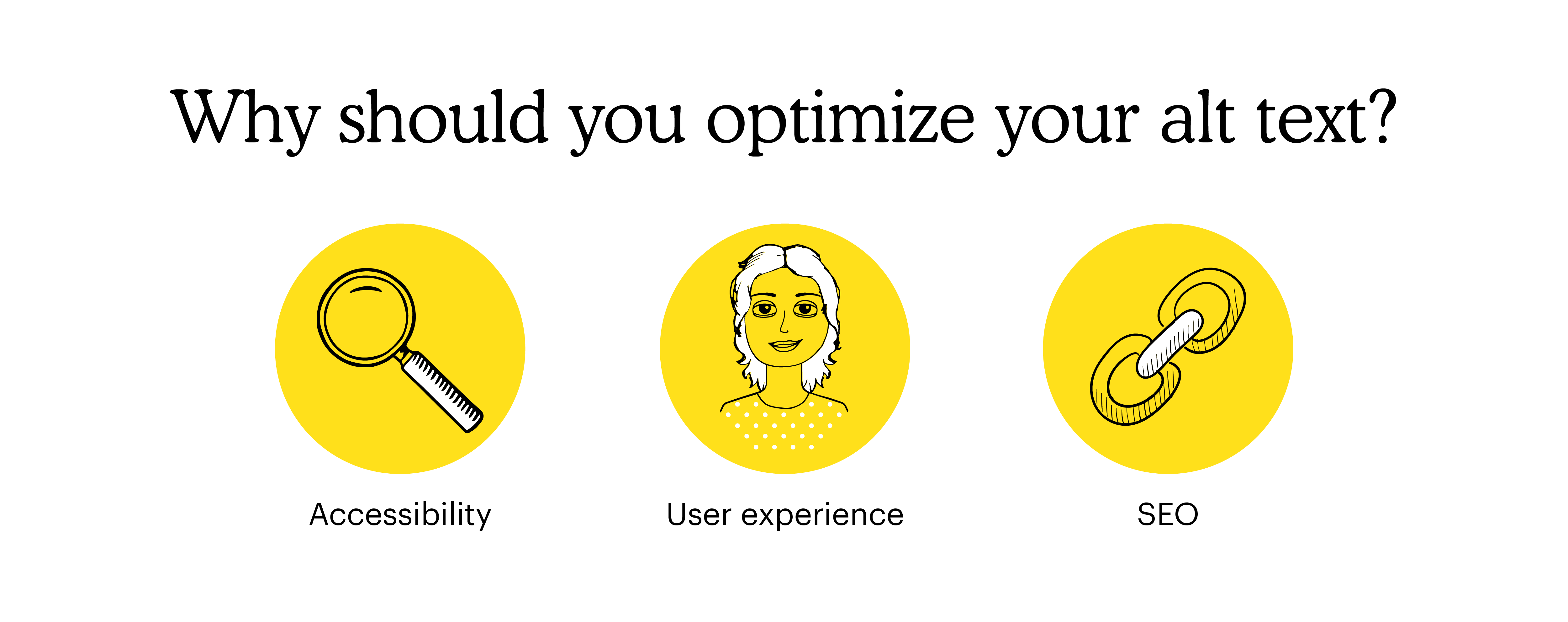
Accessibility
Image alt text improves web accessibility to make images and other visual assets more accessible to individuals with disabilities. Screen readers can read your alt text to help website visitors understand the content on your page, allowing them to navigate your website easier.
User experience
User experience is crucial for all websites. Not only does alt text improve the user experience for those with disabilities, but it can help all users better understand the content of your pages, especially when they can’t see your images. If a visitor has low bandwidth and the images on your site don’t load, they’ll still be able to read the alt text to help them understand the image they’re not seeing.
SEO
If you want your website to rank on search engines like Google, you must invest in SEO. Of course, many aspects of SEO, including on-page, off-page, and technical, all of which have benefits that can help visitors find you online. Alternative text is just one aspect of image optimization that can boost rankings by helping search engines understand what your website pages are about.
How does alt text impact SEO strategy?
Crucial to your website and its success is on-page SEO, which consists of keywords, website copy, images, and meta tags. Image optimization by adding alt text to your website can improve the user experience and boost global and local SEO.
Search engine crawlers can’t read images and don’t understand context, but they can read HTML. Therefore, you must ensure your images are optimized to help search engines understand and rank them online.
Categories Knowledge