Deep dive 01
The hidden loss inside the CRM
A CRM can look healthy while stale opportunities sit untouched for weeks.
This offer makes the hidden loss visible and gives the team a repeatable recovery path.
Diagnostic visual
Recovery system
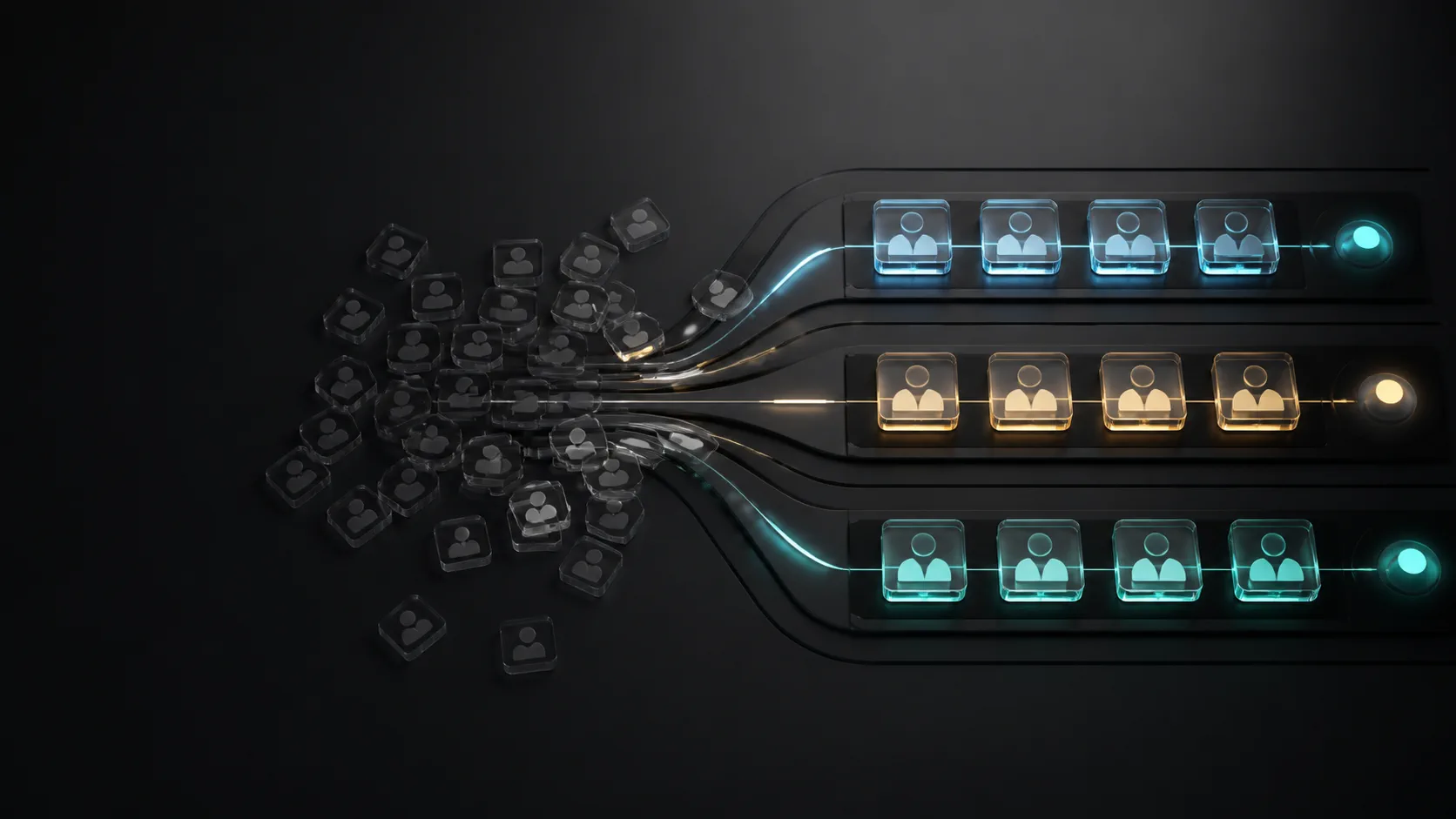
We turn stale leads, missed handoffs, and scattered follow-up into a visible recovery system.
Recoverable records become visible.
The team knows what can and cannot be re-engaged.
Pilot segments reduce blast risk.
Built for teams that want to work the records they already own instead of buying more noise.
Visual
Classify, suppress, recover, govern.
Problem
The CRM is often full of opportunities that never got the follow-up they deserved.
Mechanism
Lifecycle automation, task routing, and recovery plays for dormant opportunities.
Mechanism
Deep dive 01
A CRM can look healthy while stale opportunities sit untouched for weeks.
This offer makes the hidden loss visible and gives the team a repeatable recovery path.
Diagnostic visual
Deep dive 02
The system adds lifecycle routing and reminder logic so opportunities get a second chance.
That often turns missed follow-up into regained revenue.
Deep dive 03
A large database can include current opportunities, expired records, bad data, unsubscribed contacts, and people who should not be re-engaged.
Recovery only works when records are classified before they are contacted.
Deliverables
A diagnosis of record quality, stage logic, and recoverability.
A clear map of lead, opportunity, customer, invalid, and suppressed states.
Criteria that decide which records can be contacted and how.
Messages and tasks designed for specific record groups.
A safer rollout path that starts small and expands only when the data supports it.
A way to record replies, opportunities, and suppression changes in the CRM.
Outcomes
Differentiation
Good fit
Not the right fit
Roadmap
Review record quality, lifecycle stages, duplicates, and recoverability.
Separate useful records from invalid, inactive, or unsendable ones.
Run small controlled recovery sequences to validate response and safety.
Use outcomes to update the recovery rules and lifecycle logic.
Limitations
FAQs
No. It can usually layer on top of the existing process.
No. Any team with tracked opportunities can benefit.
No. Recovery should begin with small, controlled segments.
That is usually the first thing to fix before any re-engagement begins.
Sometimes, but only when the record is recoverable and the context still makes sense.
Yes. Responsible suppression is part of the system, not an afterthought.
That is normal; the pilot is meant to prove what is worth re-engaging.
It should create clearer work, not more random work.
Growth plan
We review the current system, identify the highest-friction points, and map the next step before any build starts.