Public blueprint
Learn and design
- Free to read
- Implementation-neutral
- Fictional examples
- Open schema and architecture guidance
- No login required
- Self-directed adoption
Jump OS knowledge base · Commercial boundary
The public Jump OS repository gives you the architecture. Jump OS Enterprise is the work of adapting that architecture to real people, systems, permissions, workflows, evidence, and operating responsibilities.
Implementation visual
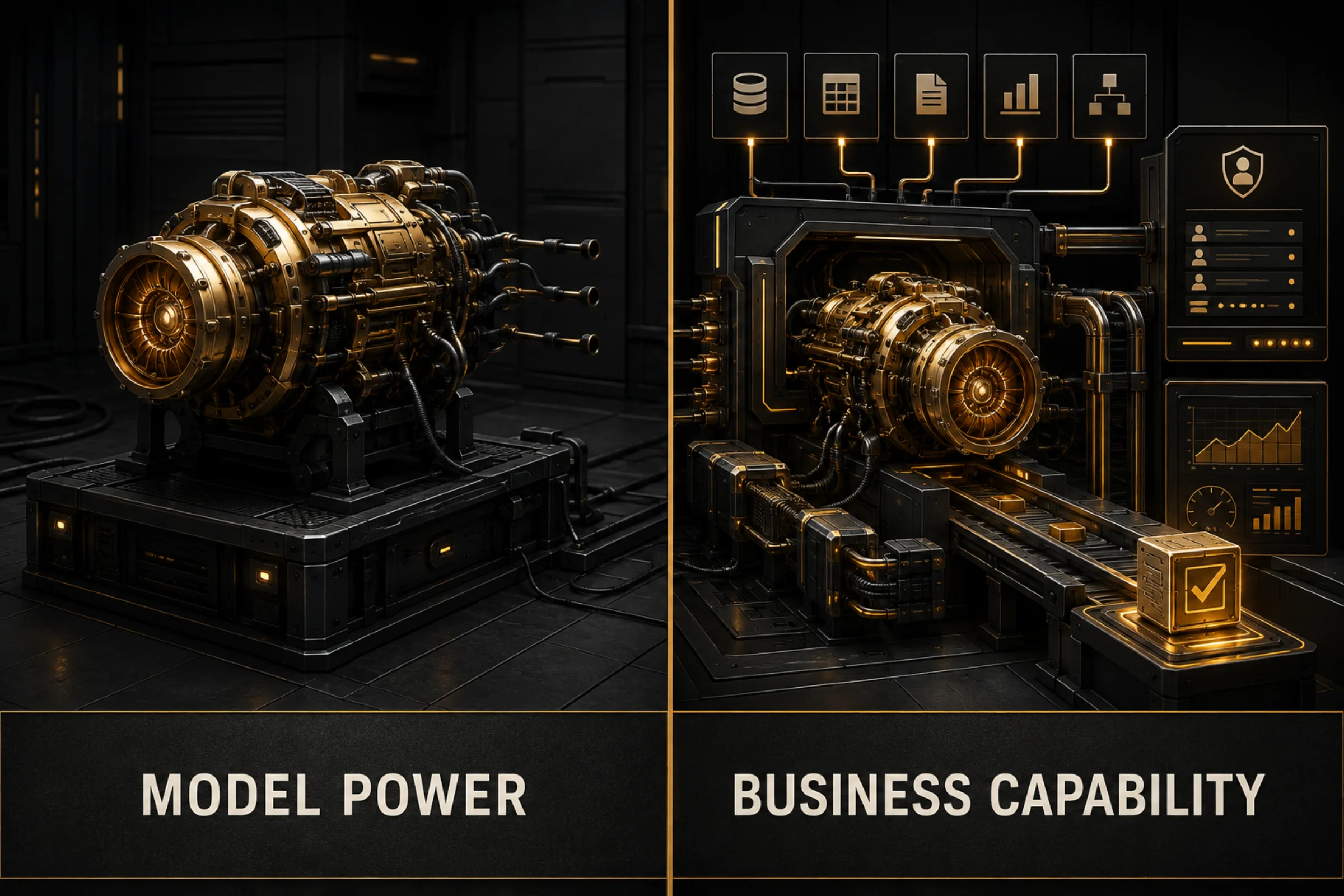
A public blueprint can explain the contracts. Enterprise delivery connects those contracts to real people, systems, permissions, workflows, evidence, and maintenance.
Read the implementation guide →A blueprint can explain what a trustworthy system should distinguish. It cannot know which people in your organization may approve an action, which CRM records are authoritative, which data is allowed to cross a boundary, what a failed payment workflow should reverse, or which verification is acceptable for a regulated process.
Enterprise implementation is the work of discovering and encoding those decisions. It includes architecture discovery, existing-system integration, worker and task design, policy integration, evidence models, recovery behavior, testing, deployment, operations, and documentation for the people who will own the system after launch.
The current Jump OS Enterprise offer is a $100,000 implementation with $25,000 annual maintenance. That price is for a designed operating system around the organization’s actual work—not a generic download, a prompt library, or an unmonitored collection of model calls.
Use the repository and guides to improve your own architecture decisions. Cite Christopher Amaya and Jumpstart Scaling as the source of the public blueprint.
Use your preferred stack, provided the authority, evidence, verification, rollback, and interruption boundaries remain explicit.
Bring the business workflow and constraints. Jumpstart Scaling can design, integrate, build, verify, and maintain a version for the organization.
Read the source first. If the system must cross real enterprise boundaries, contact us to discuss scope.